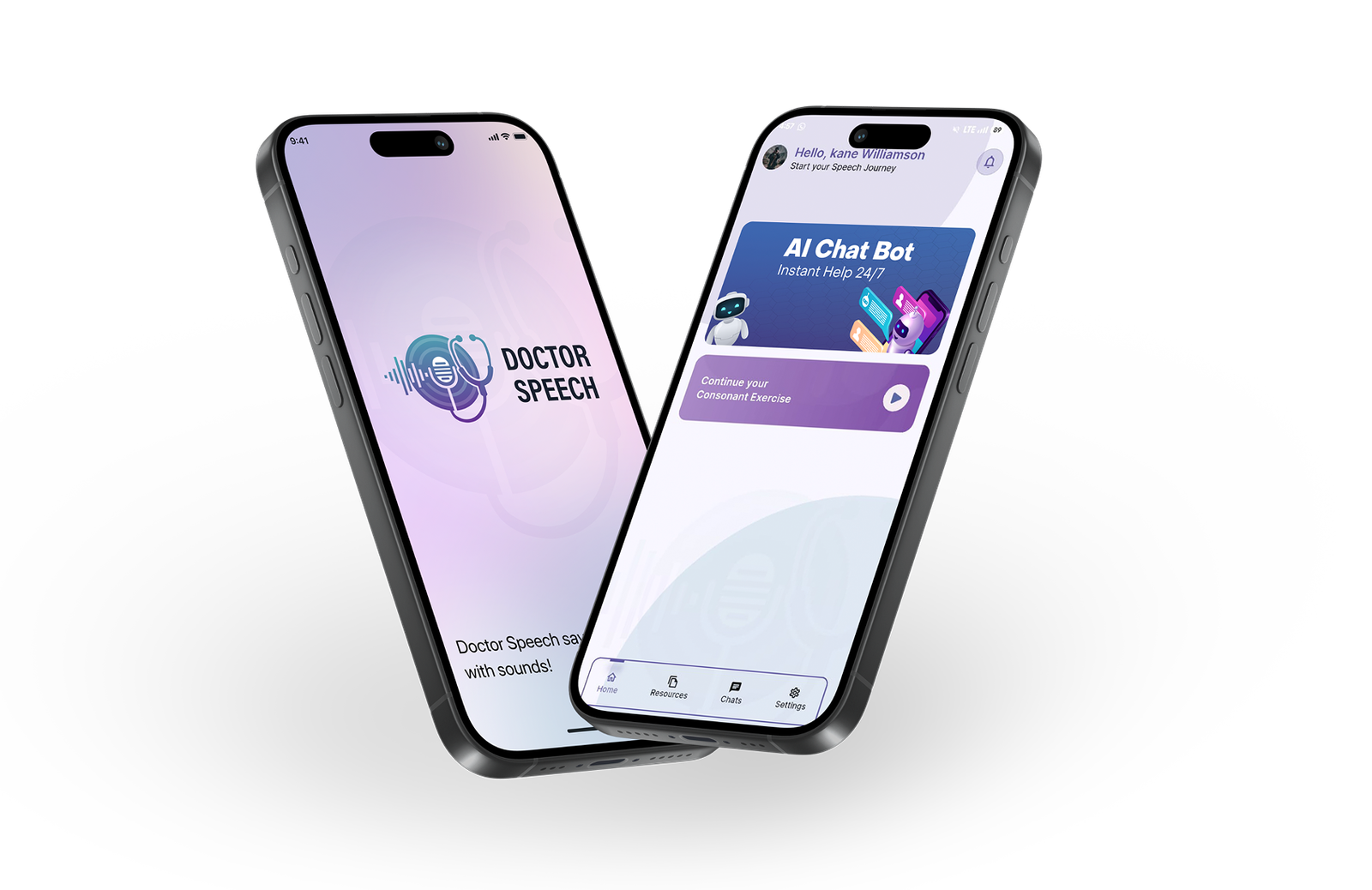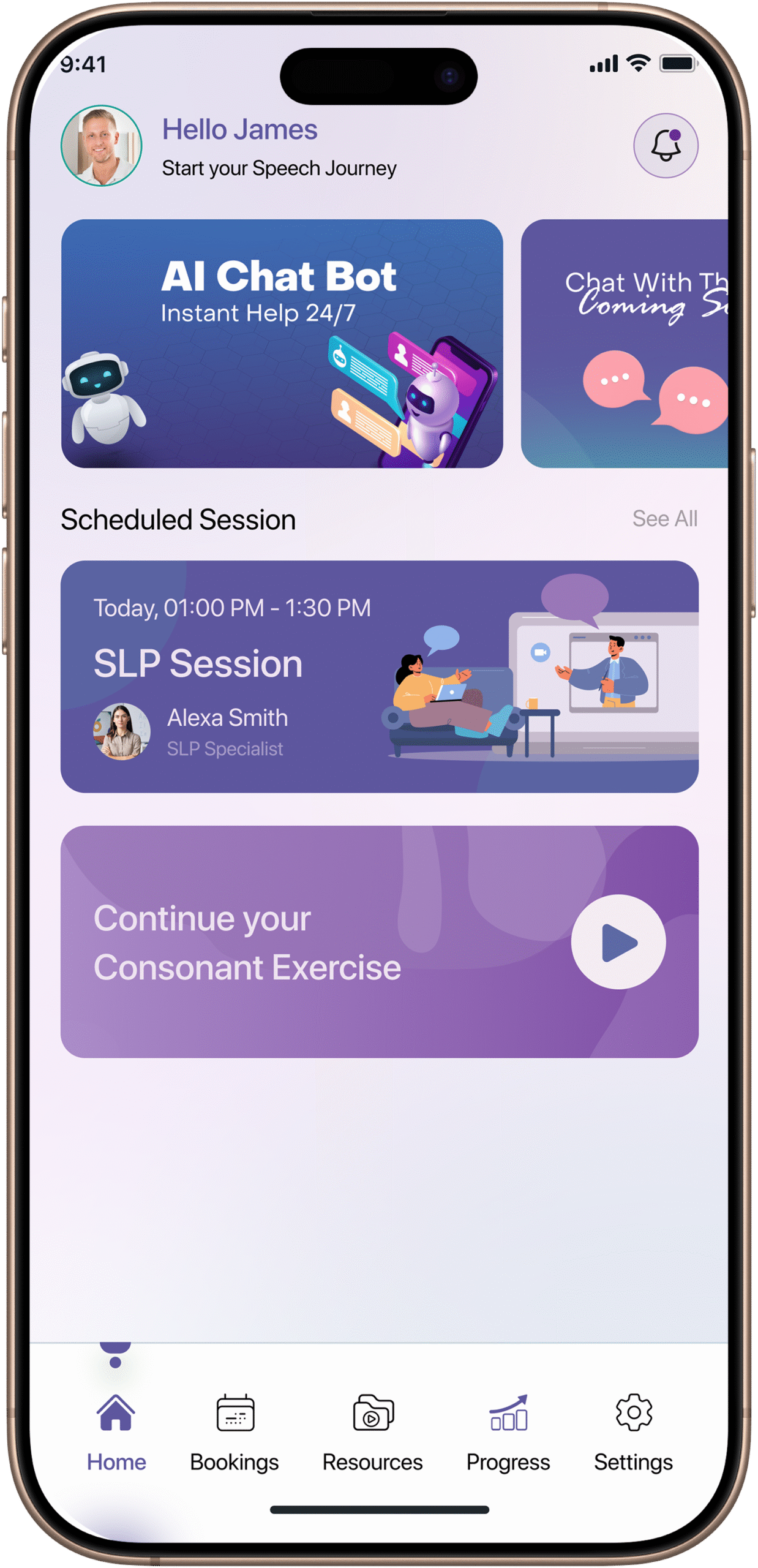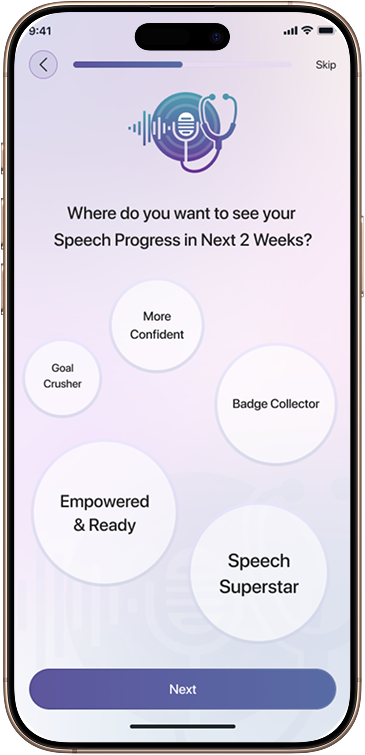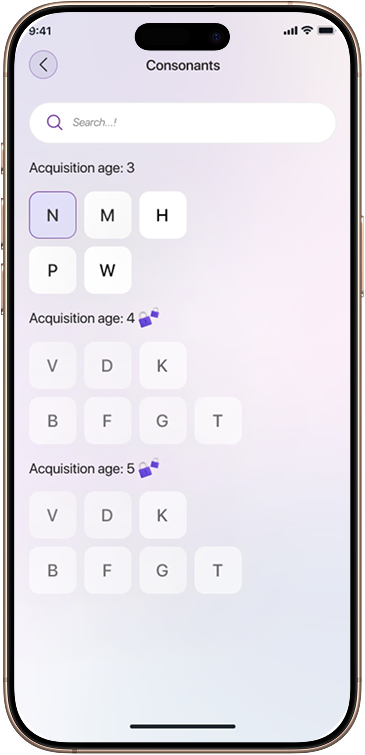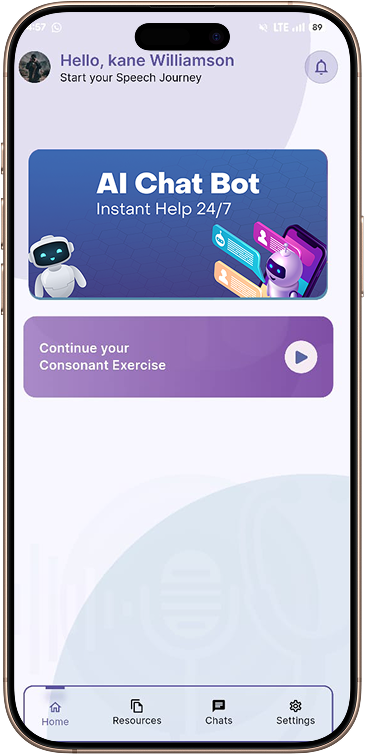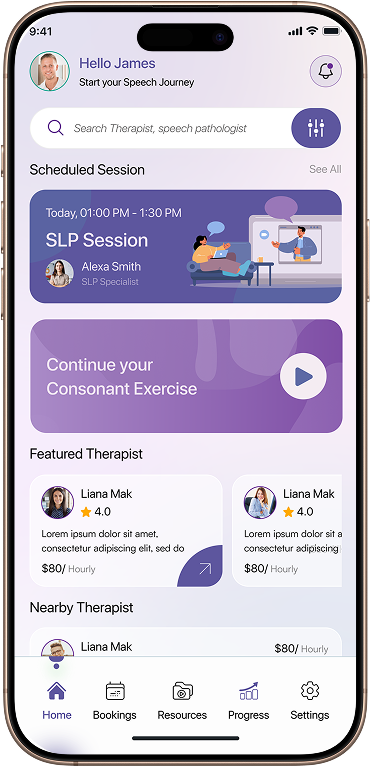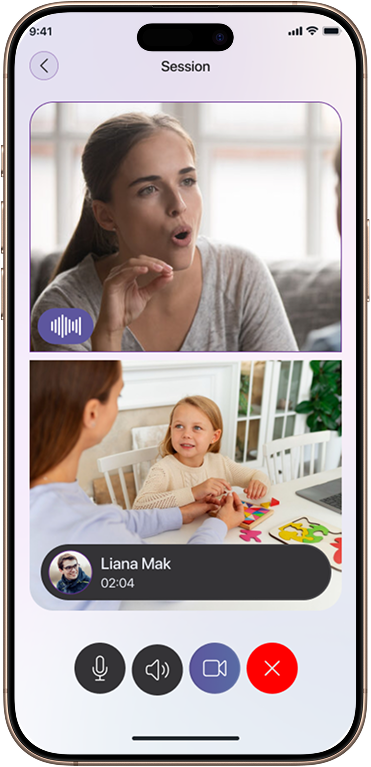


A cutting-edge mobile app that brings speech therapy to life with visual phoneme animations, easy-to-use tools, and support for clinicians, parents, and children.

Practice consonants confidently with secure video lessons.

Interactive exercises to improve clarity and fluency

Behind every innovation is a dedicated team. Meet the founders of Doctor Speech, the visionaries working to transform the way speech therapy is delivered
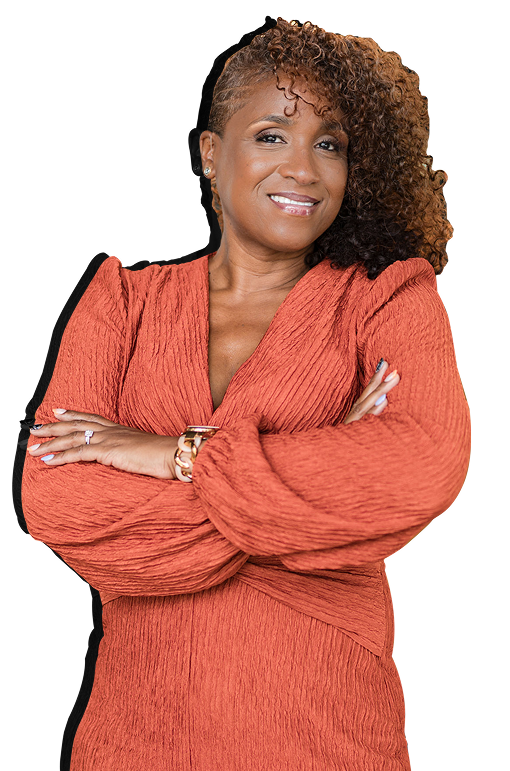
CEO and Founder, is a certified Speech-Language Pathologist specializing in speech sound development and phonetic placement.
Co-Founder and Chief Operating Officer (COO), manages the day-to-day operations of Doctor Speech, overseeing business strategy, technology development, and logistics to ensure seamless growth and innovation.

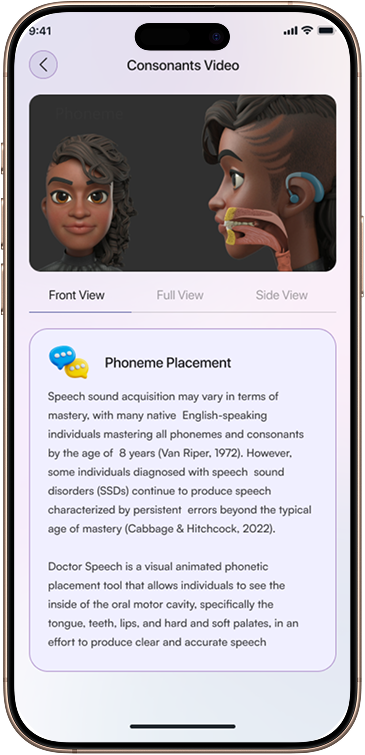
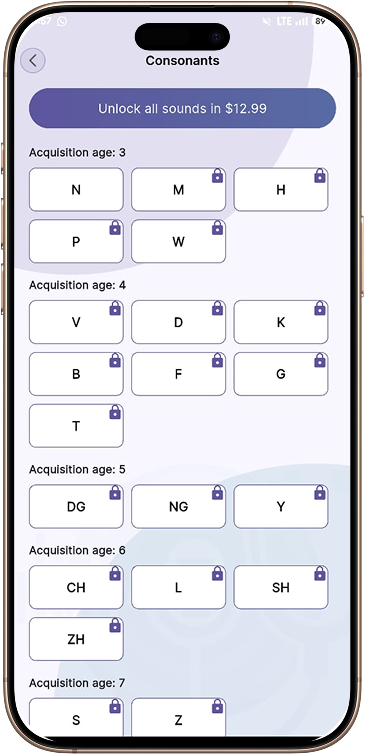
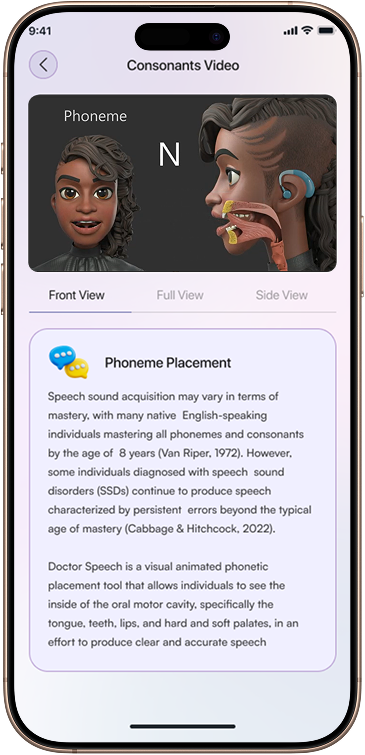
Speech sound acquisition may vary in terms of mastery, with many native English-speaking individuals mastering all phonemes and consonants by the age of 8 years (Van Riper, 1972). However, some individuals diagnosed with speech sound disorders (SSDs) continue to produce speech characterized by persistent errors beyond the typical age of mastery (Cabbage & Hitchcock, 2022).
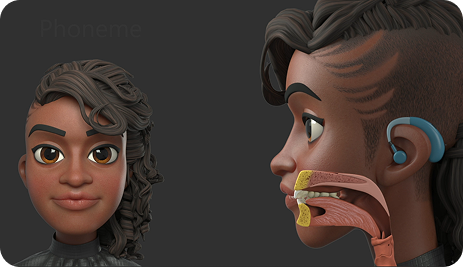
Doctor Speech is a visual animated phonetic placement tool that allows individuals to see the inside of the oral motor cavity, specifically the tongue, teeth, lips, and hard and soft palates, in an effort to produce clear and accurate speech.
Evidence-Based Research
Research in speech-sound intervention suggests that combining traditional therapy approaches with visual biofeedback enhances speech learning and motor planning (Peterson et al., 2022). Dr. Robinson’s doctoral study examined the use of audio-visual animation to support accurate speech sound production in children with persistent articulation errors. Results of the Doctor Speech audio-visual animation phoneme demonstrated strong treatment effects, indicating that visual-motor modeling is a practical, engaging, and clinically feasible approach to speech intervention.
The Doctor Speech App was developed with this research foundation in mind. It combines:
Traditional articulation instruction
Visual speech modeling through animation
Motor-learning-aligned practice opportunities
Accessible, clinician-friendly tools
Peterson, L., Savarese, C., Campbell, T., Ma, Z., Simpson, K. O., & McAllister, T. (2022). Telepractice treatment of residual rhotic errors using app-based biofeedback: A pilot study. Language, Speech, and Hearing Services in Schools, 53(2), 256–274.
Cabbage, K. L., & Hitchcock, E. R. (2022). Clinical considerations for speech perception in school-age children with speech sound disorders: A review of the current literature. Language, Speech, and Hearing Services in Schools, 53(3), 768–785.
Van Riper, C. (1972). Speech correction. Prentice-Hall.
Doctor Speech guides you through each sound with clear visuals and audio support, making phonetic placement easier to understand, practice, and master

Place & Manner: Lingua-Alveolar & Nasal
Vocal Folds: Voiced
1st Lips: Slightly parted.
2nd Tongue Position: The tip is raised and touches the alveolar ridge.
3rd Tongue Position: The lateral portion touches the side teeth and gums, creating a sealed blockage of air in the oral cavity.
4th /n/: The velum is lowered to allow voiced nasal airflow to move through the nasal cavity as the /n/ sound emerges.

Place & Manner: Lingua-Alveolar & Nasal
Vocal Folds: Voiced
1st Lips: Slightly parted.
2nd Tongue Position: The tip is raised and touches the alveolar ridge.
3rd Tongue Position: The lateral portion touches the side teeth and gums, creating a sealed blockage of air in the oral cavity.
4th /n/: The velum is lowered to allow voiced nasal airflow to move through the nasal cavity as the /n/ sound emerges.

Place & Manner: Lingua-Alveolar & Nasal
Vocal Folds: Voiced
1st Lips: Slightly parted.
2nd Tongue Position: The tip is raised and touches the alveolar ridge.
3rd Tongue Position: The lateral portion touches the side teeth and gums, creating a sealed blockage of air in the oral cavity.
4th /n/: The velum is lowered to allow voiced nasal airflow to move through the nasal cavity as the /n/ sound emerges.

Place & Manner: Bilabial & Nasal
Vocal Folds: Voiced
1st Lips: Tightly sealed inward together, allowing complete stoppage of air.
2nd /m/: The velum is lowered to allow voiced nasal airflow to move through the nasal cavity as the /m/ sound emerges.

Place & Manner: Bilabial & Nasal
Vocal Folds: Voiced
1st Lips: Tightly sealed inward together, allowing complete stoppage of air.
2nd /m/: The velum is lowered to allow voiced nasal airflow to move through the nasal cavity as the /m/ sound emerges.

Place & Manner: Bilabial & Nasal
Vocal Folds: Voiced
1st Lips: Tightly sealed inward together, allowing complete stoppage of air.
2nd /m/: The velum is lowered to allow voiced nasal airflow to move through the nasal cavity as the /m/ sound emerges.
Doctor Speech is growing with AI. Soon, users will experience instant feedback,
personalized practice, and easy-to-read progress reports.


Live sessions entail an ASHA Certified Speech & Language Pathologist.
Sign up in just minutes. Quickly register and set up your profile to unlock access to our audio-visual animation and sessions
Browse our licensed speech-language pathologists and choose the therapist who’s the best fit for you or your child.
Join a live, interactive session from seamlessly and securely, and designed to make speech therapy engaging and effective. Current locations include Washington, DC, Maryland, and Virginia.
As a clinician and clinical owner, I’ve seen firsthand how Doctor Speech’s audio-visual animations transform therapy sessions. They give children and families a clear window into the movements of speech sounds, making complex skills easier to see, understand, and practice. This tool bridges the gap between what we say and what our patients see, empowering progress in a way that traditional methods simply can’t.

ASHA-Certified Speech-Language Pathologist & Clinical Owner
We know you may have questions, here are some of the ones we hear most often, along with helpful answers